550 Paracord Strength: How Much Can It Really Hold?
The "550" in 550 paracord means the cord has a minimum breaking strength of 550 pounds under static load. That is the mil-spec standard for Type III paracord (MIL-C-5040H), and it is the most common cord type used in survival bracelets. But rated strength and real-world performance are not the same thing.
Knots, UV exposure, water, and dynamic loading all reduce how much weight the cord can safely handle. We tested bracelets from every major brand in our catalog, dug into the engineering behind nylon kernmantle cord, and put together this reference so you know exactly what 550 paracord can — and cannot — do.
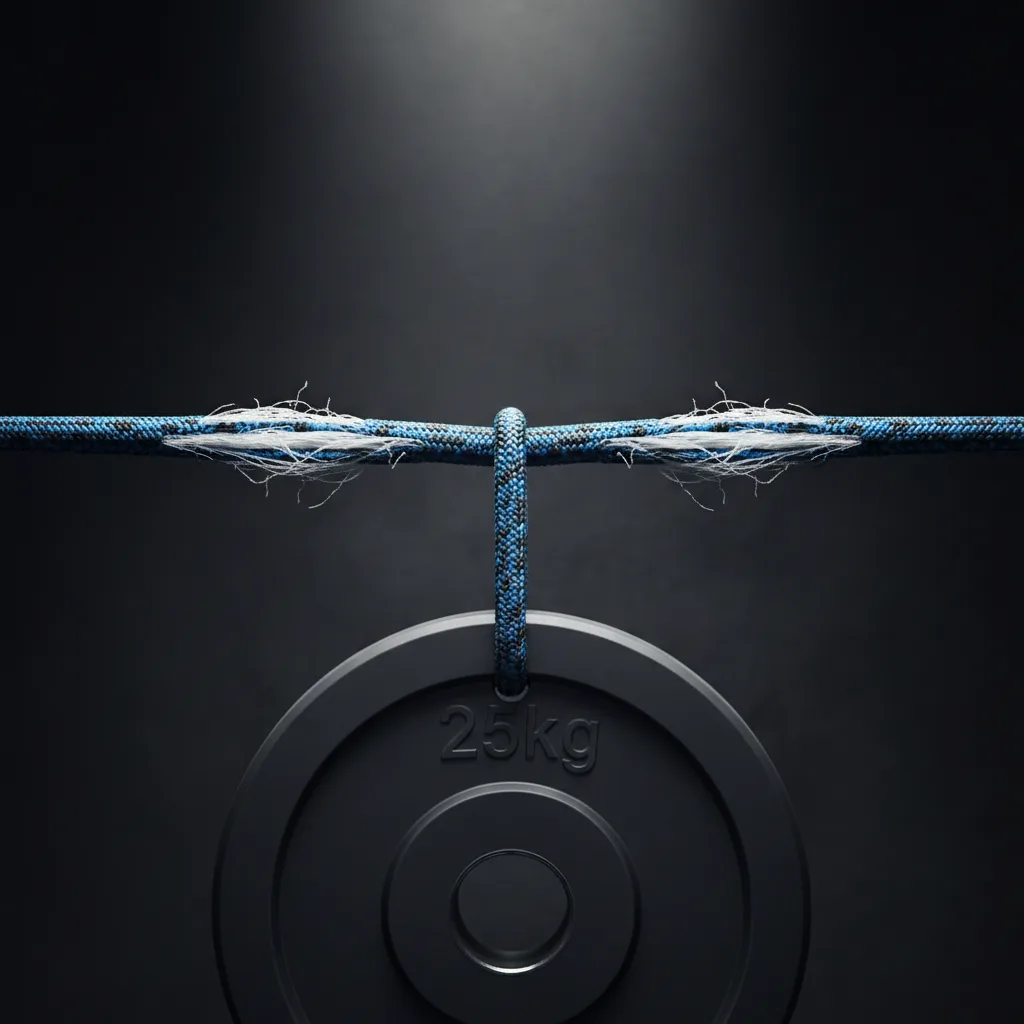
What "550" Actually Means
The 550-pound rating is a minimum tensile breaking strength established by the U.S. military specification MIL-C-5040H for Type III nylon parachute cord. In testing, a fresh length of cord is clamped at both ends and pulled until it breaks. The cord must sustain at least 550 pounds of force before failure to pass the spec.
This is a static load test — meaning the force is applied slowly and steadily, not suddenly. The cord does not experience shock, vibration, or jerking. In a controlled lab environment with no knots, no UV damage, and no wear, quality mil-spec 550 paracord typically breaks closer to 600-650 pounds. The 550-pound figure is the guaranteed minimum, not the average.
How Inner Strands Contribute to Overall Strength
Mil-spec 550 paracord is a kernmantle construction — an inner core (kern) surrounded by a braided outer sheath (mantle). Each of the 7 inner strands holds approximately 35-50 pounds individually. The outer sheath is not just protective; it contributes significant tensile strength on its own.
Here is how the strength breaks down:
| Component | Count | Strength Per Unit | Subtotal |
|---|---|---|---|
| Inner strands | 7 | ~35-50 lbs each | 245-350 lbs |
| Outer sheath | 1 (32-36 braided strands) | N/A | 150-200 lbs |
| Total | — | — | ~550+ lbs |
This is why you can pull individual inner strands for fine tasks — fishing, sewing, lashing — and each strand is still strong enough to hold meaningful weight. A single inner strand works well as emergency fishing line, a repair suture for torn gear, or a bootlace replacement. The Atomic Bear gives you 12 feet of 7-strand cord, meaning 84 feet of usable inner strands if you separate them all.
Real-World vs. Rated Capacity
The 550-pound lab rating assumes perfect conditions that never exist in the field. Here is what actually reduces your usable strength:
Knots Reduce Strength by 30-50%
Every knot creates a bend where the outer fibers carry more load than the inner fibers. This stress concentration makes the knot the weakest point in any cord system. Different knots retain different percentages of the cord's rated strength:
- Bowline: Retains ~60-70% (330-385 lbs) — best general-purpose knot
- Figure-eight: Retains ~65-70% (358-385 lbs) — good for end loops
- Clove hitch: Retains ~60-65% (330-358 lbs) — common but not the strongest
- Overhand knot: Retains ~50-55% (275-303 lbs) — worst common knot
UV Exposure Degrades Nylon
Nylon is susceptible to ultraviolet degradation. Continuous outdoor sun exposure breaks down the polymer chains, causing the cord to stiffen, fade, and lose tensile strength. After 6-12 months of direct sunlight exposure, paracord can lose 30-50% of its rated strength. Cord that has faded significantly from its original color should be considered compromised.
Water Absorption
Standard nylon paracord absorbs up to 3.5% of its weight in water. When wet, the cord temporarily loses approximately 10-15% of its breaking strength. It also becomes slightly more elastic, which changes its behavior under load. The cord regains full strength once completely dry. The aZengear uses waterproof-rated cord that resists absorption better than standard nylon.
Abrasion and Wear
Running cord over sharp rocks, rough bark, or metal edges damages the outer sheath fibers. Even minor sheath damage reduces overall breaking strength because the sheath carries 150-200 pounds of the total load. Inspect cord before critical use — if you can see inner strands through the sheath, the cord is significantly weakened.
Age and Storage
Nylon degrades slowly even in storage, especially in hot or humid environments. Well-stored paracord (cool, dark, dry) retains its strength for years. Cord stored in a hot attic, car trunk, or exposed to chemical fumes degrades faster. If your bracelet is more than 3-4 years old, treat it as reduced-strength for critical applications.
Practical Load Limits for Survival Use
The engineering rule of thumb for cordage is to divide the rated breaking strength by 3 to get the safe working load limit (WLL). For 550 paracord, that gives you approximately 183 pounds of safe working capacity.
Here is how the working load applies to common survival tasks:
| Task | Typical Load | 550 Paracord Safe? |
|---|---|---|
| Bear bag suspension | 10-30 lbs | Yes — well within limits |
| Tarp ridgeline | 20-50 lbs tension | Yes — even with knot reduction |
| Clothesline with wet gear | 5-15 lbs | Yes — minimal load |
| Gear lashing to pack | 10-40 lbs | Yes — solid hold |
| Dragging a deer (flat ground) | 50-150 lbs drag force | Yes — but double cord for margin |
| Emergency tourniquet | 30-60 lbs tension | Yes — but thin cord cuts into skin |
| Climbing / rappelling | 500-2000+ lbs (shock load) | NO — use rated climbing rope |
For most survival bracelet applications — shelter building, gear repair, food storage, signaling — 550 paracord is dramatically overbuilt. A bear bag weighs 10-30 pounds. A tarp ridgeline handles 20-50 pounds of tension. The only time you approach the cord's limits is hauling or dragging heavy loads, and even then, doubling the cord gives you a comfortable safety margin.
Comparison with Other Cordage
Understanding how 550 paracord compares to other common cordage puts its strength in perspective:
| Cordage Type | Breaking Strength | Best For |
|---|---|---|
| 550 Paracord (Type III) | 550 lbs | General utility, shelter, lashing |
| 750 Paracord (Type IV) | 750 lbs | Heavy-duty utility, hauling |
| Micro paracord (Type I) | 95 lbs | Fishing, fine lashing, sewing |
| Bank line (#36) | 320 lbs | Trapping, trotlines, camp tasks |
| Climbing rope (10.2mm) | 5,500-6,500+ lbs | Life safety, climbing, rappelling |
| Heavy-duty zip ties | 120-175 lbs | Quick temporary fastening |
| Jute twine | ~20 lbs | Light bundling, fire tinder |
550 paracord sits in a sweet spot — strong enough for nearly every utility task, light enough to carry in a bracelet, and versatile enough that the inner strands serve as separate cordage for fine work. Climbing rope is 10x stronger but weighs 65 grams per meter versus paracord's 7 grams per meter. Bank line is lighter but less than half the strength. For survival bracelet applications, 550 is the gold standard for good reason.
How Our Reviewed Bracelets Leverage Cord Strength
Every bracelet in our catalog uses 550-rated paracord, but the total usable cord varies significantly:
- Atomic Bear and HR8: 12 feet per bracelet — the maximum in our catalog. That gives you 84 feet of inner strands or a single 12-foot utility line rated to 550 lbs.
- aZengear: 10.5 feet of waterproof-rated cord. Slightly less length but better moisture resistance, which preserves strength in wet conditions.
- RLXMARTD: 10 feet per bracelet, but rated at 485 lbs rather than the standard 550 — the only sub-550 cord in our catalog. Still more than adequate for camp tasks, but worth noting the difference.
- ELK: 8 feet per bracelet — the shortest in our lineup. The trade-off is the lightest, most comfortable bracelet for daily wear.
Frequently Asked Questions
Can 550 paracord hold a person's weight?
A single strand of 550 paracord is rated to hold 550 pounds of static load before breaking. Most adults weigh 150-250 pounds, so technically yes — but never use paracord as a life-safety line. Knots reduce strength by 30-50%, dynamic loads (falls) multiply force by 5-10x, and UV degradation weakens cord over time. For supporting body weight, always use gear rated and certified for life safety.
What is the working load limit of 550 paracord?
The standard working load limit is one-third of the rated breaking strength — approximately 183 pounds for 550 paracord. This safety factor accounts for knots, wear, UV exposure, and dynamic loading. For critical applications, many professionals use a 5:1 safety ratio, which puts the working load at 110 pounds.
Does 550 paracord lose strength over time?
Yes. UV exposure is the primary culprit — nylon degrades under direct sunlight and can lose 30-50% of its rated strength after 6-12 months of continuous outdoor exposure. Water absorption, repeated loading cycles, abrasion, and chemical exposure also reduce strength. Inspect paracord regularly for fading, stiffness, or fraying — all signs of degradation.
What is the difference between 550 and 750 paracord?
550 paracord (Type III) has 7 inner strands and a 550lb breaking strength. 750 paracord (Type IV) has 11 inner strands and a 750lb breaking strength, with a slightly thicker 4mm diameter vs 550's 3.2mm. Type IV is heavier and bulkier but stronger. Most survival bracelets use Type III (550) because it offers the best balance of strength, weight, and flexibility.
How much weight can a single inner strand hold?
Each of the 7 inner strands in mil-spec 550 paracord holds approximately 35-50 pounds individually. The outer sheath contributes an additional 150-200 pounds. Combined, the 7 strands (245-350 lbs) plus the sheath (150-200 lbs) reach the 550lb minimum rating. Individual strand strength varies by manufacturer and age of the cord.
Is commercial 550 paracord as strong as military-spec?
Not always. True mil-spec paracord (MIL-C-5040H, Type III) must pass specific tensile, elongation, and construction tests. Commercial "550 paracord" is not required to meet these standards. Some commercial cords use fewer inner strands or lower-quality nylon. Look for cords labeled "mil-spec" or "MIL-C-5040H compliant" rather than just "550 paracord" for guaranteed strength.
How do knots affect paracord strength?
Knots reduce paracord breaking strength by 30-50% depending on the knot type. A bowline retains about 60-70% of rated strength (best for most applications). A figure-eight retains about 65-70%. A simple overhand knot is the worst, retaining only 50-55%. Sharp bends in any knot create stress concentration points where the cord is most likely to fail.
The Bottom Line on 550 Paracord Strength
550 paracord is dramatically stronger than most survival tasks require. A bear bag, tarp ridgeline, or gear lashing barely registers against the cord's rated capacity. The real concern is not whether the cord is strong enough — it is whether knots, UV damage, water, and age have reduced that strength below your safety margin.
The practical rule: divide the rated strength by 3 for your working load limit (about 183 lbs), inspect your cord before critical use, and never use paracord where a certified life-safety line is required. Follow those guidelines, and your survival bracelet cord will handle anything you throw at it.
For the most cord per bracelet, the Atomic Bear and HR8 both deliver 12 feet of genuine 550lb-rated cord — more usable strength in a wrist-worn package than any other option in our catalog.