Budget Survival Gear Guide: Best Gear Under $25
You do not need to spend hundreds of dollars to be prepared. The most critical survival gear — fire starting, cordage, signaling, and water purification — can all be covered for less than the cost of a restaurant meal. Here is exactly how to build a functional survival kit on a budget.
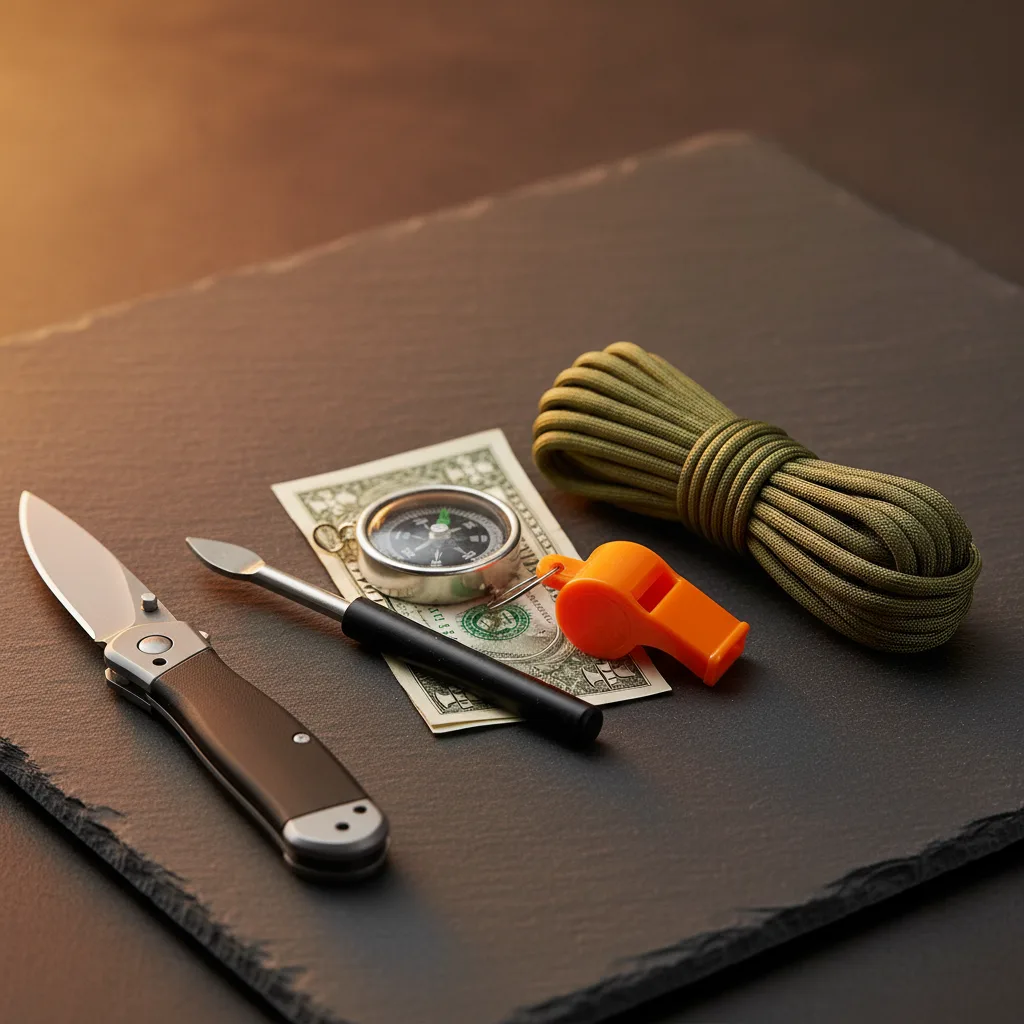
Why Budget Gear Beats No Gear
A $10 paracord bracelet with a functional fire starter is infinitely more useful than a $200 survival kit sitting in your closet at home. The best survival gear is the gear you actually carry — and budget items are light enough, small enough, and cheap enough to be with you every time you step outside.
We are not going to pretend that a $3 bracelet is as refined as a $13 one. The fire starter may need more strikes, the compass may settle slower, and the buckle may feel flimsier. But the cord is the same 550lb nylon, the whistle still carries a quarter mile, and it is on your wrist when you need it.
The $25 Survival Kit
This kit addresses all five survival priorities (shelter, water, signaling, navigation, first aid) for under $25 total:
1. Paracord Survival Bracelet — $3-10
Covers: cordage, fire starting, signaling (whistle), basic navigation (compass). One item, four capabilities.
- Best value: HR8 3-Pack ($9.99) — 12ft of 550lb cord per bracelet, fire starter included. Three bracelets for $3.33 each.
- Absolute cheapest: RLXMARTD 8-Pack ($9.99) — $1.25 each, but no fire starter. Better for groups than individuals.
- Best single budget pair: aZengear 2-Pack ($9.49) — waterproof cord, mini saw, fits smaller wrists.
2. Emergency Space Blanket — $2-4
Covers: shelter, warmth retention. A mylar space blanket reflects 90% of radiated body heat and weighs 2 ounces. It is the single most weight-efficient warmth tool you can carry. Available at any outdoor retailer or pharmacy.
3. Water Purification Tablets — $7-10
Covers: water safety. Iodine or chlorine dioxide tablets purify questionable water sources in 30 minutes. A single bottle treats 25+ liters — enough for several days. Lighter and cheaper than a filter straw, though taste suffers.
4. Mini First Aid Supplies — $5-8
Covers: injury treatment. Assemble a pocket-sized kit: 6 adhesive bandages, 2 gauze pads, 4 antiseptic wipes, 2 butterfly closures, medical tape, and 4 ibuprofen tablets. Fits in a sandwich-sized zip bag.
Best Budget Paracord Bracelets Compared
Here is how the most budget-friendly bracelets in our catalog stack up:
- RLXMARTD 8-Pack — $9.99 ($1.25/bracelet): 10ft cord, 485lb strength, compass + whistle only. Best for scout troops and group handouts.
- Smithok 4-Pack — $8.99 ($2.25/bracelet): ~9ft cord, 550lb, full tool suite with fire starter. Best family value.
- HR8 3-Pack — $9.99 ($3.33/bracelet): 12ft cord, 550lb, fire starter + camo option. Best cord-per-dollar ratio.
- aZengear 2-Pack — $9.49 ($4.75/bracelet): 10.5ft waterproof cord, 550lb, mini saw blade. Best budget personal pair.
Deep Dive: Where Budget Gear Falls Short
Being honest about limitations helps you prepare for them. Here is where budget survival gear underperforms — and how to compensate:
Fire Starters Need More Practice
Budget ferro rods produce sparks, but they may require 5-10 strikes where a premium rod needs 1-2. Compensate by practicing at home and carrying backup tinder (cotton balls with petroleum jelly, dryer lint in a zip bag).
Compasses Are Approximate
Budget bracelet compasses tell you "roughly north" but will not give you precise bearings. Compensate by learning basic natural navigation (sun position, moss growth patterns, star identification).
Cord Quality Varies
The RLXMARTD uses 485lb cord instead of the standard 550lb. That is still enough for most survival tasks, but avoid using it for load-bearing applications where failure would be dangerous. The HR8, Smithok, and aZengear all use genuine 550lb cord.
Buckles Can Break
Budget plastic buckles may crack if dropped on rock or forced in extreme cold. Carry the bracelet on your wrist (where the buckle is protected) rather than clipped to a pack exterior where it can bang against surfaces.
Budget Gear for Specific Activities
The best budget kit depends on what you actually do outdoors. Here is how to optimize your $25 budget for different activities:
Day Hiking ($20-25)
- Primary bracelet: aZengear 2-pack ($9.49) — waterproof cord handles sweat and rain, mini saw cuts through brush for trail clearing, fits wrists as small as 7"
- Emergency blanket: $3 — weighs 2oz, fits in any pocket
- Water purification tablets: $7 — backup when you run out of carried water on longer-than-planned hikes
- Adhesive bandage pack: $3 — blisters are the number one day-hike injury
Car Emergency Kit ($22-28)
- Primary bracelet set: HR8 3-pack ($9.99) — one in the glove box, one in your roadside kit, one on your wrist when you drive
- Emergency blanket: $3 — critical for winter breakdowns in cold climates
- Small flashlight or headlamp: $8-10 — changing a tire in the dark without hands-free light is dangerous
- Total: Under $23, covers warmth, signaling, cordage, and visibility for roadside emergencies
Camping Add-On ($15-20)
- Primary bracelet: aZengear or HR8 — fire starting and cord for campsite tasks like rigging a tarp or hanging a lantern
- Purification tablets: $7 — backup for when your campsite water supply is questionable
- Extra tinder (petroleum jelly cotton balls in a film canister): $0 — make these at home from supplies you already have
Testing Budget Gear Before You Rely on It
Budget gear requires verification that premium gear usually does not. Spend 30 minutes testing every component before adding it to your kit.
Fire Starter Test
Strike the ferro rod 10 times against the included scraper. Count how many strikes produce visible sparks. A good budget fire starter should spark on at least 7 of 10 strikes. If your success rate is below 50%, sharpen the scraper edge with a fine metal file or replace the bracelet. The HR8 and Smithok fire starters consistently spark on 8-9 out of 10 strikes in our testing — acceptable for a bracelet-sized ferro rod.
Compass Verification
Compare your bracelet compass against a phone compass app or a dedicated baseplate compass. The bracelet compass should agree within 15 degrees. If it is further off, mark the offset direction so you can compensate in the field. Some budget compasses settle slowly in cold weather — test at the temperatures you expect to encounter.
Cord Pull Test
Pull a 6-inch section of cord from your bracelet and examine the inner strands. Genuine 550lb paracord has exactly 7 inner strands wrapped in a braided nylon sheath. If you count fewer than 7 strands, the cord is a lower-rated commercial grade. It will still work for most tasks, but do not trust it for load-bearing applications where failure could cause injury.
Whistle Range Test
Have a friend walk 200 yards away while you blow the whistle with three short blasts. If they can hear it clearly, the whistle is functional for signaling. Most budget bracelet whistles carry 200-400 yards depending on wind conditions — further than a human voice but less than a dedicated emergency whistle like a Fox 40.
Common Mistakes with Budget Gear
- Buying the cheapest option for your primary personal bracelet. The RLXMARTD at $1.25 each is great for extras and handouts, but your personal emergency bracelet should have a fire starter. Spend $3-5 per bracelet for your own use.
- Thinking cheap means disposable. Budget paracord bracelets last for years with basic care. The cord does not degrade from daily wear, and the buckle tools are metal (compass, fire striker).
- Not testing gear before relying on it. Open your budget bracelet, practice the fire starter, verify the compass points north, blow the whistle. Discover any issues at home, not in the field.
- Skipping water purification to save money. Dehydration kills more people than any other survival factor except exposure. A $7 bottle of purification tablets is the best $7 you will ever spend on safety.
- Buying 8 bracelets when you need 2. If you are buying for yourself, get 2-3 quality bracelets instead of 8 basic ones. You need reliability, not quantity.
Upgrade Path: Growing Beyond Budget
Once you have used your budget kit, you will know exactly which items need upgrading. Here is the most efficient upgrade order:
- Upgrade your fire starter — A standalone ferro rod ($8-12) with a dedicated striker produces massive sparks compared to bracelet-sized rods.
- Upgrade your water purification — Move from tablets ($7) to a filter straw ($15-20) for instant, better-tasting water.
- Add a real compass — A Suunto or Silva baseplate compass ($10-15) with map-reading capability.
- Upgrade your bracelet — Move to an Atomic Bear ($12.99) or NVioAsport 20-in-1 ($13.99) for better tools and LED capability.
Frequently Asked Questions
Can you build a real survival kit for under $25?
Yes. A paracord bracelet with fire starter ($9-10), an emergency space blanket ($3), and a water filter straw ($12-15) gives you fire, shelter, signaling, and water purification — the four most critical survival capabilities — for under $25 total.
What is the cheapest paracord survival bracelet worth buying?
The RLXMARTD 8-pack at $1.25 per bracelet is the cheapest functional option. For personal use where fire-starting matters, the HR8 3-pack at $3.33 per bracelet offers much better tools and cord. Below $1 per bracelet, quality drops to novelty-item territory.
Is cheap survival gear reliable in a real emergency?
Budget gear can be reliable if you know its limitations. A $3.33 HR8 bracelet has the same 12ft of 550lb cord as the $6.50 Atomic Bear. The difference shows in tool refinement (fire starter spark quality, compass readability) — not in the fundamental capability of the cord.
What should I buy first on a tight budget?
A paracord survival bracelet. For $9-10, you get cord, fire starter, whistle, and compass — four survival tools in one wearable package. No other single item under $10 covers that many bases.
Are dollar-store survival tools worth buying?
Generally no. Dollar-store compasses are often non-functional, fire starters may not produce sparks, and "paracord" may be generic rope with no inner strands. Spend $9-15 on a reputable bracelet from a brand with real Amazon reviews instead of $5 on tools that look right but do not work.
How do I upgrade my budget kit over time?
Start by replacing the weakest link. Usually that means upgrading from a bracelet fire starter to a dedicated ferro rod ($8-12), then adding a real compass ($10-15), then upgrading your water purification. Spend where it matters most for your specific activities.
Start Your Kit Today
A $10 bracelet and a $3 space blanket put you ahead of 90% of day hikers. You do not need the best gear — you need gear that is with you when it matters.