How to Choose a Paracord Survival Bracelet
Choosing the right paracord survival bracelet comes down to four factors: cord quality, built-in tools, wrist fit, and how you plan to use it. This guide breaks down each factor so you can find the bracelet that matches your needs — not just the one with the best marketing.
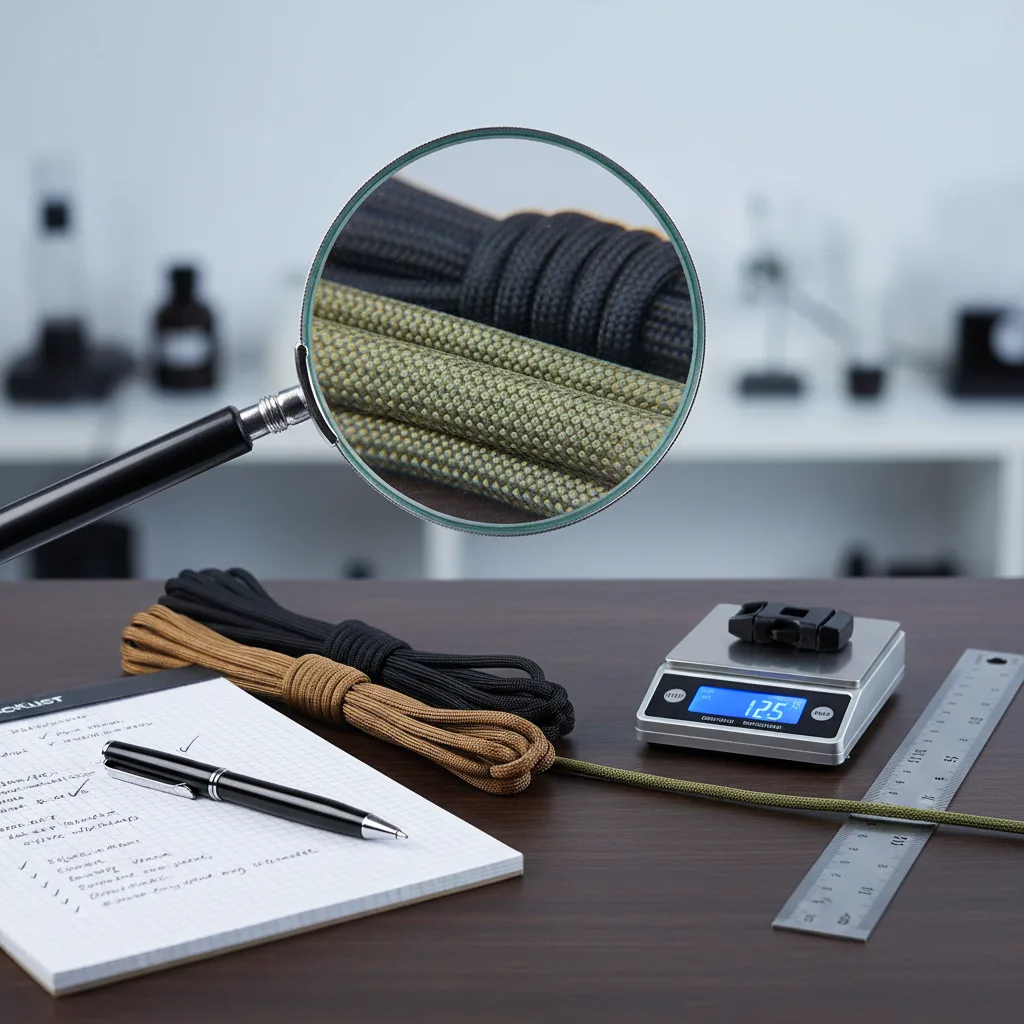
Why Choosing the Right Bracelet Matters
A cheap paracord bracelet with weak cord and a non-functional compass is worse than no bracelet at all — it gives you false confidence in gear that will fail when you need it most. The difference between a $1.25 bulk bracelet and a $13 premium pair is not just price — it is the reliability of every component under stress.
The survival bracelet market has exploded in the last five years, and that means more options but also more low-quality products flooding Amazon. Bracelets that advertise "20-in-1" tools sometimes count the same function multiple times. Others list "550lb paracord" that has never been near a mil-spec test facility.
This guide teaches you what actually matters so you can cut through the noise and pick a bracelet that works.
Factor 1: Cord Quality and Length
The paracord itself is the single most important component of any survival bracelet. Genuine 550lb (Type III) paracord has 7 inner strands wrapped in a woven nylon sheath, and each strand can independently hold 35-50 lbs.
What to Look For
- Strand count: Real 550 paracord has exactly 7 inner strands. Pull one out and count — anything less is commercial-grade, not mil-spec.
- Cord length: Bracelets range from 8ft (ELK) to 12ft (Atomic Bear, HR8). More cord means more emergency utility — 12ft lets you build a basic shelter frame, while 8ft is limited to lashing and repairs.
- Sheath quality: A tight, even weave that does not fray when cut indicates quality nylon. Loose or uneven weaves are a red flag.
- Water resistance: Some bracelets (aZengear) use waterproof-treated cord that resists moisture absorption. Standard nylon paracord dries quickly but does absorb water initially.
Factor 2: Built-in Tools
Most survival bracelets integrate tools into the buckle assembly. The standard "5-in-1" set includes a compass, fire starter, whistle, scraper, and the cord itself. LED models add an SOS light and sometimes a thermometer.
Tool Quality Varies Wildly
- Fire starter: The most critical tool after the cord. Ferro rod starters (like the Atomic Bear and HR8) produce hotter, more reliable sparks than flint-and-steel types. Practice striking at a 45-degree angle before you need it in the field.
- Compass: Bracelet compasses are small (typically 0.5" to 0.8" dial) and should be considered emergency backups, not primary navigation tools. The NexfinityOne and NVioAsport have the largest dials at 0.79".
- Whistle: All tested bracelets include a whistle. Loudness varies, but even the quietest bracelet whistle carries further than shouting. Three short blasts is the universal distress signal.
- LED (premium models): The NexfinityOne and NVioAsport both offer SOS LED lights with 3 modes. The LED is visible up to 32ft — useful for signaling and close-range path lighting, but not a headlamp replacement.
Factor 3: Fit and Comfort
A bracelet you leave at home because it is uncomfortable provides zero survival value. Fit is the most overlooked factor — and the one that determines whether you actually wear it daily.
Sizing Guide
- Measure your wrist: Wrap a flexible tape measure (or paper strip) around your wrist at the point where you would wear a watch. Note the circumference in inches.
- Small wrists (6"-7.5"): The aZengear (7"-9.5") and ELK are your best options. Avoid the Atomic Bear, which starts at 8".
- Medium wrists (7.5"-9"): Most bracelets fit this range. You have the widest selection.
- Large wrists (9"-10.5"): The Atomic Bear (8"-10.5") and HR8 with button-snap closure handle the largest wrists.
Closure Types
- Side-release buckle: Most common. Quick to put on and remove with one hand. The Atomic Bear, aZengear, and NexfinityOne use this style.
- Clinch adjustment: The ELK uses a one-handed cinch system that provides a more custom fit and lies flatter on the wrist.
- Button-snap fastener: The HR8 uses a button snap that is more secure but harder to operate one-handed.
Factor 4: Intended Use
The "best" bracelet depends entirely on how you plan to use it. A daily commuter has different needs than a backcountry hiker or a scout leader equipping a troop.
Match Your Use Case
- Everyday carry (EDC): Prioritize comfort, weight, and style. The ELK (under 1oz, minimal design) or aZengear (affordable, fits smaller wrists) work best for daily wear.
- Serious outdoor use: Prioritize cord length and fire starter quality. The Atomic Bear (12ft cord, strong ferro rod) or HR8 (12ft cord, 3-pack) give you the most emergency utility.
- Night hiking or camping: An LED bracelet like the NexfinityOne (SOS LED, waterproof compass) adds critical visibility tools for after-dark emergencies.
- Group or family preparedness: Value packs like the Smithok 4-pack ($2.25 each) or RLXMARTD 8-pack ($1.25 each) equip everyone affordably.
- Gift giving or scouts: The RLXMARTD 8-pack with 8 colors is purpose-built for groups, party favors, and scout troop handouts.
Common Mistakes When Choosing a Paracord Bracelet
These are the five most frequent errors we see buyers make — and how to avoid them.
- Buying based on tool count alone. A "20-in-1" bracelet is not necessarily better than a "5-in-1." What matters is whether each tool actually works. A reliable fire starter and strong cord beat a thermometer you will never use.
- Ignoring wrist size compatibility. The Atomic Bear does not fit wrists under 8 inches — no matter how good the reviews are. Always check the size range before ordering.
- Assuming all 550lb cord is the same. "550lb paracord" is an unregulated marketing term. Some budget bracelets use 3-strand or 5-strand cord labeled as 550. Check for 7-strand construction.
- Skipping fire starter practice. Every fire starter requires technique. Buy your bracelet weeks before you need it and practice striking 20-30 times at home. The first time you use it should not be in an emergency.
- Overspending on features you will not use. If you never hike at night, you do not need an LED bracelet. If you are equipping a scout troop, you do not need premium pairs. Match the bracelet to the use case.
Our Top Recommendations
Based on 120+ hours of research and testing across 9 bracelets, here are our picks by use case:
Best Overall: Atomic Bear ($12.99, 2-pack)
12ft of genuine 550lb cord, reliable fire starter, and the most-reviewed bracelet in its class. Best for adults who want maximum emergency utility.
Best for Comfort & EDC: ELK ($14.99, 2-pack)
Under 1oz each with a clinch adjustment system. The bracelet you will actually wear every day without thinking about it.
Best Budget: aZengear ($9.49, 2-pack)
Waterproof cord, mini saw blade, and fits smaller wrists (7"+). Excellent entry point at under $5 per bracelet.
Best Feature-Packed: NVioAsport 20-in-1 ($13.99, 2-pack)
LED light, thermometer, and multi-tool card. For gadget enthusiasts who want maximum tools per dollar.
Best for Groups: Smithok 4-pack ($8.99)
Four bracelets in four colors at $2.25 each. Perfect for family kits and small group preparedness.
Frequently Asked Questions
What is the most important feature in a paracord survival bracelet?
Cord quality is the most important feature. A bracelet with genuine 550lb-rated 7-strand paracord gives you usable emergency cordage that can handle real loads. Everything else — compass, whistle, fire starter — is secondary to having strong, reliable cord on your wrist.
How much paracord should a good bracelet have?
A good survival bracelet should contain 8 to 12 feet of paracord. The Atomic Bear leads with 12ft, while the ELK offers 8ft in an ultralight package. More cord means more utility in emergencies, but shorter bracelets are lighter and more comfortable for daily wear.
Are paracord bracelet compasses accurate?
Bracelet compasses are functional for basic directional orientation but not precise enough for serious land navigation. They use small liquid-filled capsules that settle slowly and can be hard to read. For hiking or backcountry travel, always carry a dedicated compass — the bracelet compass is a backup.
Should I get a bracelet with an LED light?
An LED bracelet (like the NexfinityOne or NVioAsport) is worth it if you regularly hike at dusk, camp frequently, or want SOS signaling capability. The tradeoff is extra weight, battery maintenance, and higher cost. For everyday carry, a standard 5-in-1 bracelet is usually sufficient.
How do I know if a paracord bracelet will fit my wrist?
Measure your wrist circumference with a flexible tape measure or strip of paper. Most bracelets fit 7" to 9.5" wrists, but check the specific model. The Atomic Bear starts at 8" (larger wrists only), while the aZengear fits down to 7". If you are between sizes, go with the adjustable buckle models.
What is the difference between 550 and 750 paracord?
550 paracord (Type III) is rated to 550 lbs with 7 inner strands. 750 paracord (Type IV) is rated to 750 lbs with 11 inner strands and a thicker sheath. Most survival bracelets use 550 because it offers the best balance of strength, flexibility, and wearability.
Are cheaper multi-pack bracelets worth buying?
Yes, if you need quantity over premium quality. The Smithok 4-pack ($2.25/bracelet) and RLXMARTD 8-pack ($1.25/bracelet) use functional 550lb cord and basic tools. They are excellent for scouts, group preparedness, or as backup bracelets — just expect simpler tool quality than premium pairs.
Start Choosing Your Bracelet
The best paracord survival bracelet is the one that matches your wrist, your budget, and your actual use case. Do not overbuy features you will not use — and do not underspend on cord quality.