Paracord Bracelets for Travel Safety: Complete 2026 Guide
Travelers face a unique gear problem: you need tools for emergencies, but airlines restrict what you can carry, weight limits punish every extra ounce, and bulky survival gear has no place in a carry-on. A paracord survival bracelet threads this needle perfectly. It weighs under 2 ounces, passes through TSA without issue, and provides 8 to 12 feet of 550lb-rated cord plus a compass, whistle, fire starter, and scraper — all worn on your wrist where it cannot be lost, stolen, or left behind in a hotel room.
We have traveled with every bracelet in our catalog — domestic flights, international connections, road trips, hostel stays, and adventure travel through remote areas. In this guide, we cover TSA considerations, travel-specific uses, which bracelets work best for different travel styles, and practical tips for getting the most out of paracord on the road.
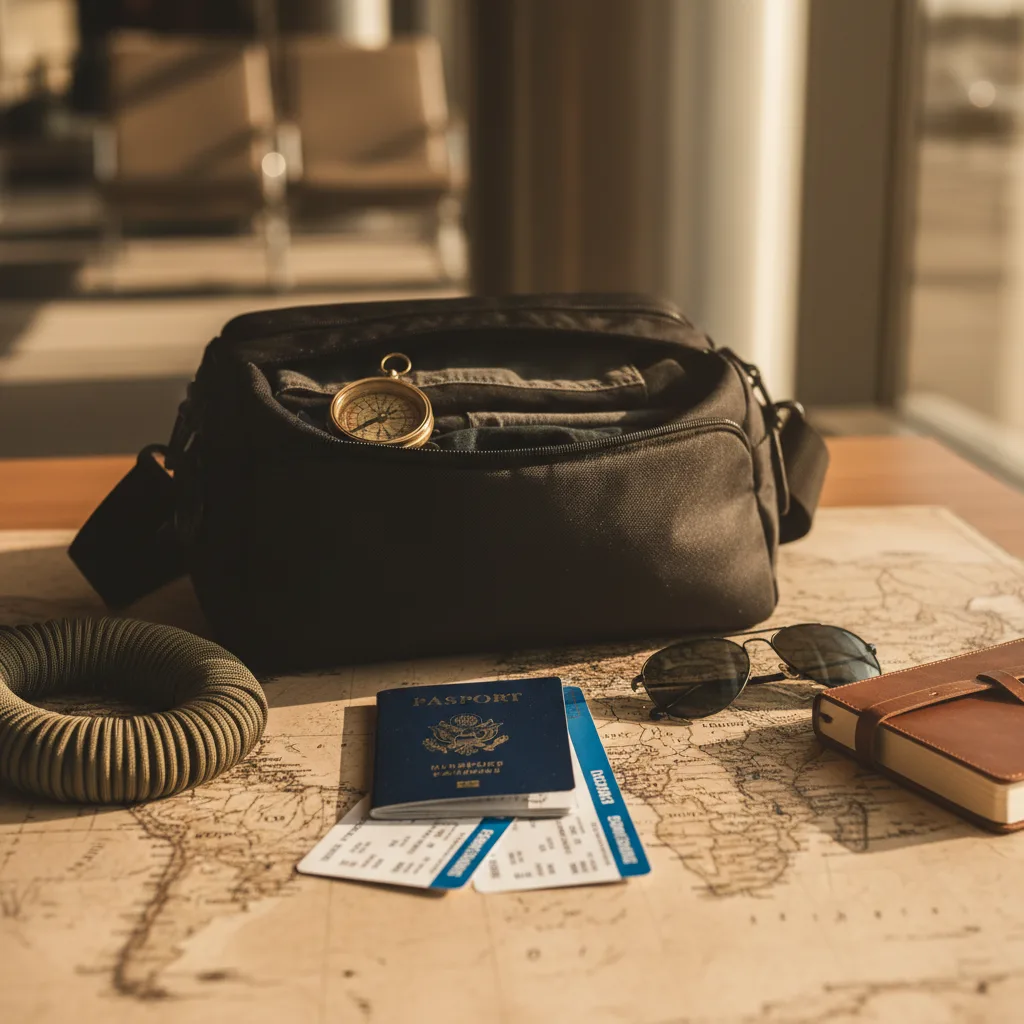
TSA and Airport Security: The Full Story
Paracord survival bracelets are TSA-friendly. The Transportation Security Administration does not classify any component of a standard survival bracelet as a prohibited item. The ferro rod fire starter is not a lighter or flammable device — it is a piece of ferrocerium that produces sparks only when struck deliberately with a steel scraper. The compass is a sealed instrument. The whistle is a plastic noisemaker. The cord is nylon rope. None of these appear on the TSA prohibited items list for carry-on or checked luggage.
We have worn paracord bracelets through TSA PreCheck, standard security lines, and international airport screening in over a dozen countries without a single confiscation. The key is wearing it confidently — do not take it off and place it separately in a bin unless asked. Most screeners recognize survival bracelets and wave them through without comment.
International Considerations
ICAO (International Civil Aviation Organization) sets the baseline security standards that most countries follow. Paracord bracelets fall well within ICAO guidelines. However, a few countries apply stricter screening protocols — particularly Israel, Singapore, and Japan, which may inspect unusual items more thoroughly. In these cases, the ELK's minimal profile and small buckle attract the least attention. If you are traveling to a country with strict security, pack the bracelet in checked luggage as a precaution.
How Travelers Use Paracord Bracelets
The utility of a paracord bracelet shifts when you move from campsite to airport terminal. Here are the travel-specific uses that our testing and community feedback have identified as most common:
1. Hostel Clothesline
Every hostel traveler knows the laundry problem. Washing clothes in a sink is easy — drying them is the challenge. Unravel 6 to 8 feet of paracord and string it between bunk frames, window hinges, or bathroom fixtures. A single bracelet provides enough line to dry a day's worth of clothing overnight. The aZengear's waterproof cord is especially good here since it does not absorb moisture from wet clothes.
2. Luggage Identification
Tie a bright section of paracord to your bag handle as a visual identifier on airport carousels. A 6-inch loop of orange or yellow cord stands out against the sea of black luggage and costs nothing compared to a luggage tag. It is also harder to remove accidentally than a clip-on tag.
3. Emergency Bag Repair
Backpack straps break, zipper pulls snap, and bags get dragged through situations they were not designed for. Paracord lashes a broken strap back together, threads through a zipper slider as a replacement pull, or binds a torn panel closed until you can reach a repair shop. On a 3-week trip through Southeast Asia, a broken backpack strap at the wrong moment can derail an entire day — 2 feet of cord and a square knot fix it in 60 seconds.
4. Gear Security
In transit stations, overnight buses, and shared hostel rooms, securing your bag to a fixed object provides peace of mind. Thread paracord through your bag's zippers and around a bed frame, bench leg, or railing. The 550lb rating means a casual thief cannot simply yank it free. This is not a substitute for a real lock, but it is a significant deterrent and works when you do not have a cable lock handy.
5. Improvised Curtain and Privacy Screen
Open-plan hostel rooms and budget accommodations often lack privacy. String paracord across your bunk space and drape a sarong, scarf, or light blanket over it. The result is a functional privacy curtain that blocks light and provides a sense of personal space — a small luxury that dramatically improves sleep quality in shared rooms.
6. Flashlight for Night Navigation
Arriving at an unfamiliar destination after dark, navigating poorly lit streets in developing countries, or finding your hostel bunk without waking the room — these are situations where a wrist-mounted LED is genuinely useful. The NexfinityOne provides hands-free illumination without draining your phone battery, which you may need for maps and translation.
7. Adventure Travel Utility
If your trip includes trekking, kayaking, climbing, or off-road travel, a paracord bracelet transitions seamlessly from airport accessory to wilderness tool. Hang food from trees, rig a rain fly, secure gear to a pack frame, or create an emergency tourniquet for a trail injury. The bracelet you wear through airport security becomes your survival backup in the backcountry.
Best Paracord Bracelets for Travel
Travel demands lightweight, low-profile gear that performs across diverse environments — airports, cities, hostels, trails, and beaches. Here are our top picks by travel style:
Best for Air Travel and Light Packing: ELK
The ELK weighs under 1 ounce per bracelet — the lightest option in our catalog by a meaningful margin. The slim profile and clean design look appropriate in any setting from airport lounges to beach bars. The one-handed clinch adjustment makes it easy to remove quickly if security asks, and easy to put back on while juggling a boarding pass and carry-on.
At 8 feet of cord per bracelet, the ELK provides less paracord than the Atomic Bear (12ft) or aZengear (10.5ft). For travel, this trade-off is worth it. You are unlikely to need 12 feet of cord in an airport or hostel, and the weight and comfort savings compound over days of continuous wear. The 2-pack at $14.99 gives you one to wear and one as a spare in your bag.
Best for Tropical and Wet-Climate Travel: aZengear
The aZengear is the only bracelet in our catalog with genuinely waterproof paracord. Standard nylon paracord absorbs water, gets heavy, and dries slowly — uncomfortable on your wrist in tropical humidity and unreliable as a clothesline when the cord itself retains moisture. The aZengear's waterproof cord sheds water and dries in minutes, making it the clear choice for Southeast Asia, Central America, island hopping, and any trip where rain, sweat, and humidity are daily constants.
The mini saw blade on the buckle adds a cutting capability that other bracelets lack — useful for trimming cord to length, scoring rope for a clean break, or sawing through zip ties and thin plastic. At $9.49 for a 2-pack, the aZengear is also the most affordable option for budget travelers.
Best for Adventure Travel and Night Exploration: NexfinityOne LED
The NexfinityOne earns its place on adventure travel itineraries with a wrist-mounted SOS LED that provides hands-free light in three modes. Navigating unlit alleyways in Marrakech, finding your tent at a festival campsite, or signaling from a trail after sunset — the LED handles all of these without pulling out your phone or hunting for a flashlight in your bag.
The trade-off is size and weight. At approximately 2 ounces per bracelet with a larger buckle assembly, the NexfinityOne is noticeably bulkier than the ELK or aZengear. For adventure travelers who spend more time on trails and in remote areas than in airports, this is an acceptable compromise. For city-hopping and hostel travel, the ELK is a better daily wear choice.
Travel Style Breakdown
Different types of travel demand different bracelet features. Here is how to match your travel style to the right model:
Business Travel
Discretion is the priority. The ELK's minimal design passes in business attire without comment. You are unlikely to need fire starting or extensive cordage, but the compass, whistle, and 8 feet of emergency cord are genuine safety tools for unfamiliar cities and delayed connections. Wear it like a watch accessory — most colleagues will not realize it is a survival tool unless you tell them.
Backpacking and Hostel Travel
The aZengear is the backpacker's pick. The waterproof cord handles hostel laundry duty, the mini saw adds utility, and the $9.49 price point fits a backpacker budget. The clothesline use case alone justifies carrying it — drying clothes without a dedicated clothesline saves the cost of a laundromat visit within the first week of travel.
Adventure and Expedition Travel
When your itinerary includes trekking, kayaking, or remote camping, bring the Atomic Bear for maximum cord length (12ft) alongside the NexfinityOne for its LED. Between the two, you have 22 feet of paracord, a fire starter, an SOS light, and full survival tool coverage. These two bracelets together weigh 3.5 ounces and replace several individual items in a first-aid and emergency kit.
Road Trips
Road trip emergencies center on vehicle issues — lashing cargo, securing a trunk lid, tying down a roof-rack item, or flagging a breakdown location. The Atomic Bear's 12 feet of cord handles all of these tasks. The fire starter provides a signaling spark visible at range if you break down at night on a rural road. Keep the bracelet on your wrist and a spare in the glove compartment.
Travel Safety Tips with Paracord
Beyond the obvious tool uses, paracord bracelets support travel safety in a few less obvious ways:
Personal Safety Signaling
The built-in whistle on every survival bracelet doubles as a personal safety alarm. Three sharp blasts is the universal distress signal and draws immediate attention in any setting — a crowded train station, an empty parking lot, or a poorly lit street. Unlike electronic alarms, the whistle never runs out of batteries and works in any weather.
Emergency Orientation
When your phone dies and you are lost in an unfamiliar city, the bracelet compass provides enough directional information to navigate back toward a known landmark. Take a mental note of which direction your hotel or transit hub lies when you set out for the day. The compass is not GPS-accurate, but "head generally north" has saved more lost travelers than any app.
Improvised Luggage Security
Thread paracord through adjacent zipper pulls on your bag and tie a tight square knot. This does not prevent a determined thief, but it defeats opportunistic pickpockets who target loosely zipped bags on public transport. The knot takes 5 seconds to tie, is invisible from a distance, and requires deliberate effort to remove — enough friction to send a pickpocket to an easier target.
Frequently Asked Questions
Are paracord survival bracelets TSA-approved for carry-on luggage?
Yes. Paracord survival bracelets are TSA-friendly. The small ferro rod fire starter, compass, whistle, and scraper are not classified as prohibited items. They contain no blades, no flammable liquids, and no restricted tools. You can wear your bracelet through security or pack it in either carry-on or checked luggage. We have traveled domestically and internationally with every bracelet in our catalog without issue.
Can I take a paracord bracelet on international flights?
In nearly all countries, yes. Paracord bracelets do not contain items restricted by ICAO (International Civil Aviation Organization) standards. However, security standards vary — some countries have stricter interpretations of "tools." If you are concerned, wear the ELK (smallest buckle, least metal) or pack the bracelet in checked luggage. We have not encountered a confiscation in any major international airport.
Which paracord bracelet is best for international travel?
The ELK at under 1 oz per bracelet. It is the lightest, most discreet, and most comfortable for extended flights and layovers. The clinch adjustment system makes it easy to remove for security if asked. For adventure travel, the aZengear adds waterproofing that protects the cord during monsoons, river crossings, and humid tropical climates.
How can I use paracord while traveling?
Common travel uses include: clothesline in hostels or hotel bathrooms, luggage identifier (bright cord tied to a handle), emergency gear lashing (broken backpack strap), securing items to a bag during transit, improvised luggage lock (cord woven through zippers), hanging a headlamp or phone in a tent, and binding a makeshift splint for a twisted ankle on a trail.
Will a paracord bracelet trigger airport metal detectors?
The buckle components contain small amounts of metal (compass housing, ferro rod) that occasionally trigger high-sensitivity detectors. In practice, this happens rarely — the metal content is comparable to a belt buckle or watch clasp. If you are flagged, the bracelet passes secondary screening without issue. For zero-hassle transit, wear the ELK with its minimal clinch closure.
Is a paracord bracelet useful for backpacking through hostels?
Absolutely. Hostel travelers consistently rank paracord bracelets as one of their top utility items. Use the cord as a clothesline across your bunk, tie your bag to a bed frame while sleeping, create a privacy curtain hanger, or improvise a secure luggage tether during layovers in transit stations. The whistle doubles as a personal safety alarm in unfamiliar areas.
Should I bring multiple bracelets when traveling?
For road trips and domestic travel, one bracelet on your wrist is sufficient. For extended international trips or adventure travel, bring two — wear one and pack one in checked luggage. This gives you a backup if the first is unraveled and used, and ensures you have a survival bracelet even if your carry-on is gate-checked or your wrist bracelet is removed for any reason.
Travel Smarter with Paracord on Your Wrist
A paracord bracelet is the highest-utility-per-ounce travel accessory you can carry. It passes through airport security, weighs less than a pack of gum, provides emergency cordage and tools in any environment, and stays on your wrist where it cannot be lost, stolen, or forgotten in a hotel safe.
For light travel and air transit, the ELK is the lightest and most discreet bracelet on the market. For tropical and wet-climate destinations, the aZengear provides waterproof cord at a backpacker-friendly price. And for adventure travel with night navigation, the NexfinityOne LED puts an SOS flashlight on your wrist.